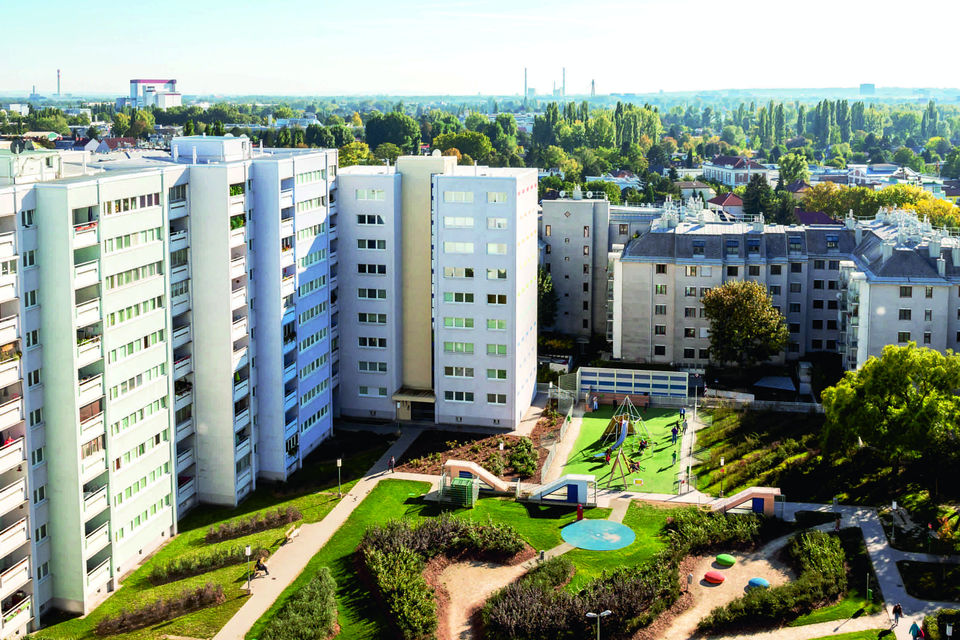
In the 22nd district of Vienna, you can find the Alfred Klinkan-Hof, a municipal housing complex with around 530 apartments. The design of the housing complex bears a slight resemblance to a Roman theatre due to its U-shaped structure. The shape of the complex, despite being of architectural interest, has the negative effect of increasing noise levels considerably, causing residents to complain to the housing management ‘Wiener Wohnen’. Not only did the City of Vienna make funds available to redesign the courtyard and thus minimise noise, they also recognised the importance of the social component. wohnpartner was tasked with initiating a participation process to involve the residents.
Participation Process: Dealing with Complaints
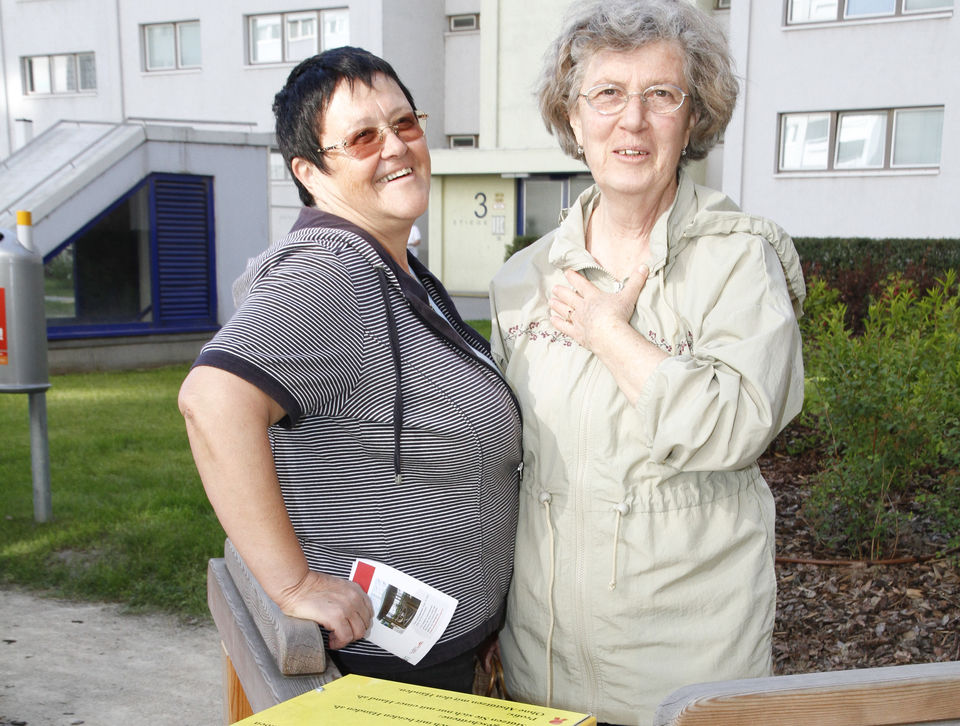
Different interest groups and other stakeholders were involved in the process: the tenants themselves, the tenants’ representatives, social and public organisations as well as Wiener Wohnen and the district authority. wohnpartner guided the different groups throughout the whole process of the re-design and helped develop and implement mutual rules for the use of common spaces.The participation process started with the establishment of different working groups. wohnpartner visited the housing-complex regularly during the process as part of their socio-spatial approach ‘wohnpartner unterwegs’ (wohnpartner on the road). They organised so-called ‘Charter talks’ for the residents, installed portable garden beds and invited the residents to assume responsibility. These charter talks were part of a participatory process to work out the so-called ‘Wiener Charta’ in 2012. The ‘Wiener Charta’ today is a document to show the basic consent of the residents in relation to the question “How do we want to respectfully live together in the city?”
Intergenerational Playground
Ideas and suggestions developed within these groups were taken into account when the actual planning phase started in 2011. Working with groups separately and using various tools such as: drawings, talks, etc. enabled them to reach, include and empower less visible tenants. The outcome of this process had a strong impact on the final structural transformation of the courtyard into an intergenerational playground. Its impact is also reflected in the wide and low-conflict use of the space by many different tenants since its opening in 2013.