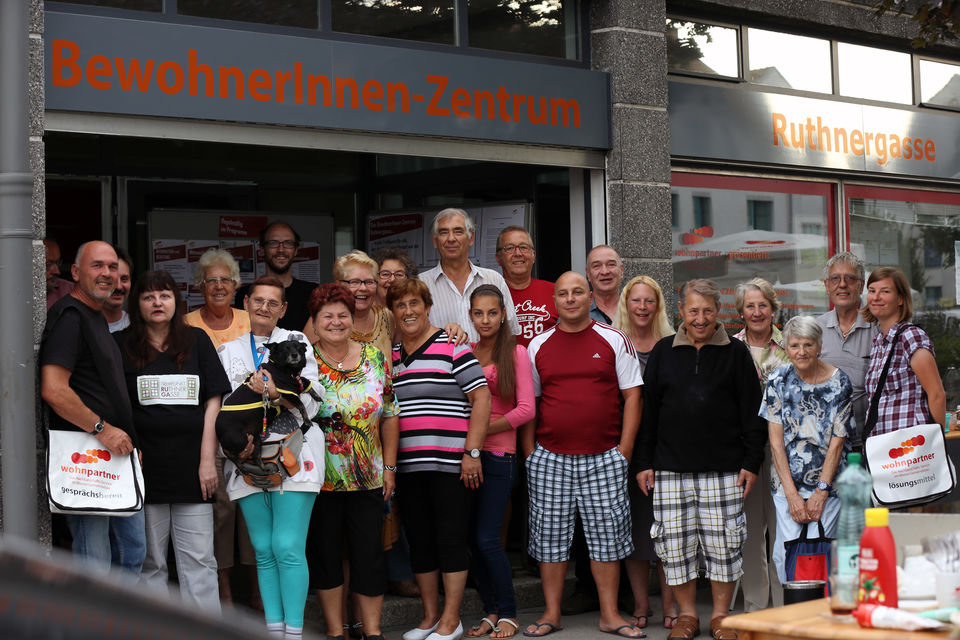
The Improvement of the living conditions of residents depends on both access to social life and social participation. For those residents who are excluded from certain social spaces, e.g. work, university, school etc., the living environment appears as a compensative resource for social participation. The value of which, is dependant on the supply structure of the habitat. As such, resident centres are opportunity structures to increase value of social participation.
Getting to know each other - having fun together
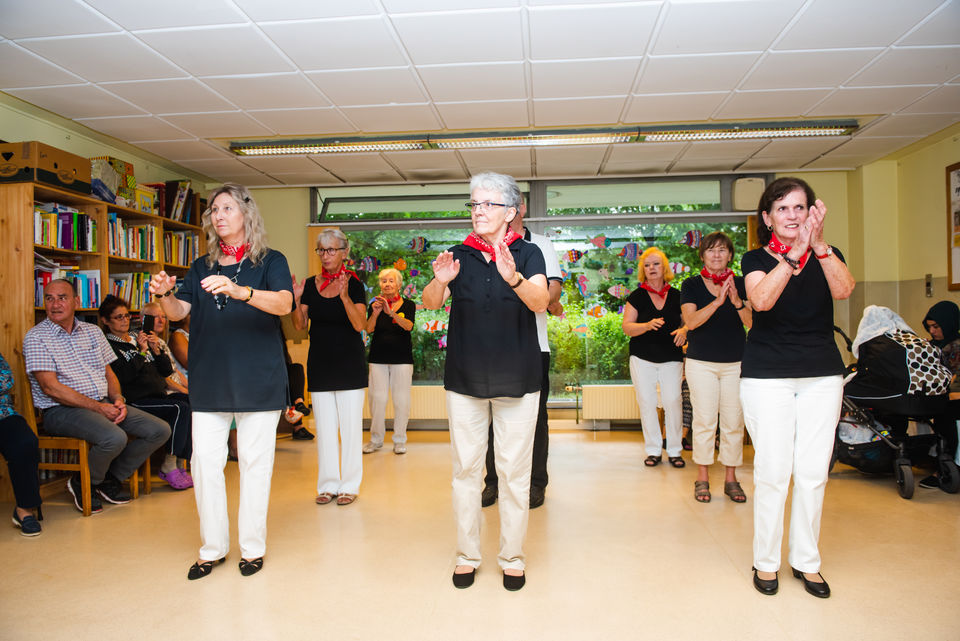
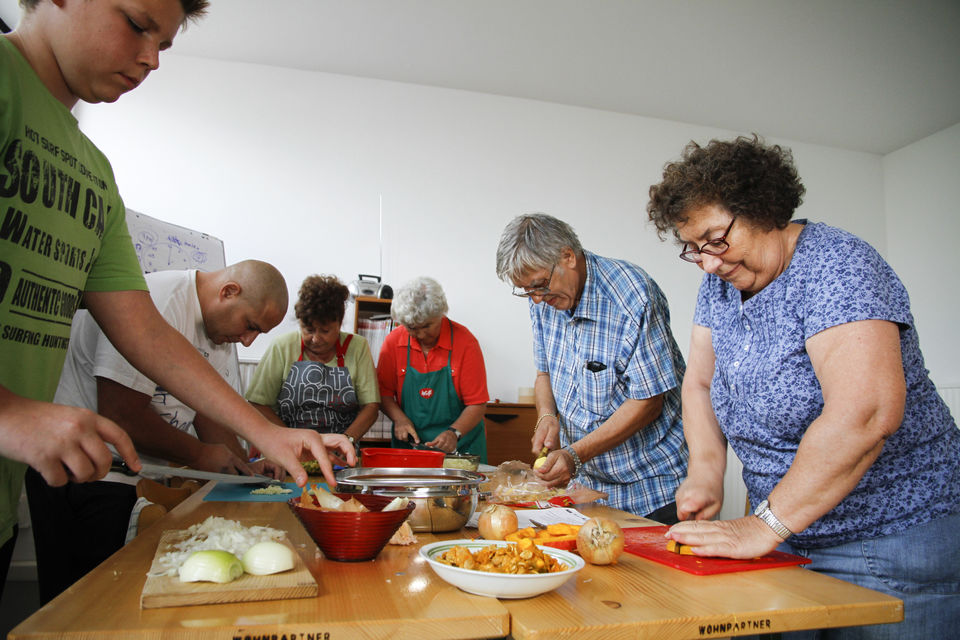
Since the opening of the first resident centre in 2012, wohnpartner has increased the number to six. The centres are open to all local tenants and are designed to be appropriated for all sorts of activities. Gardening, community cooking, artistic/creative activities, sports and health pusuits are but a few examples.
Besides providing space and supporting tenants to self-organise their activities in the centre and the surrounding neighbourhood, the personal contacts and the immediate proximity to the everyday-life-perspectives of the residents reveal insights in social needs. In the frameset of resident centres these social needs can be handled and addressed in various ways. One example is to invite experts to give information as a first step towards empowerment or to bring institutions in (f.e. youth welfare, parental counselling) to the living environments of the affected people in order to lower thresholds.
Strengthen cohesion
The aim behind this is to enhance social cohesion and decrease inequality by offering a space that on one hand provides a comfort zone and on the other hand offers itself as an enabling learning zone. It has proven to be particularly challenging to keep the balance between different poles such as: participation and regulation, opening and securing and relation and independence.