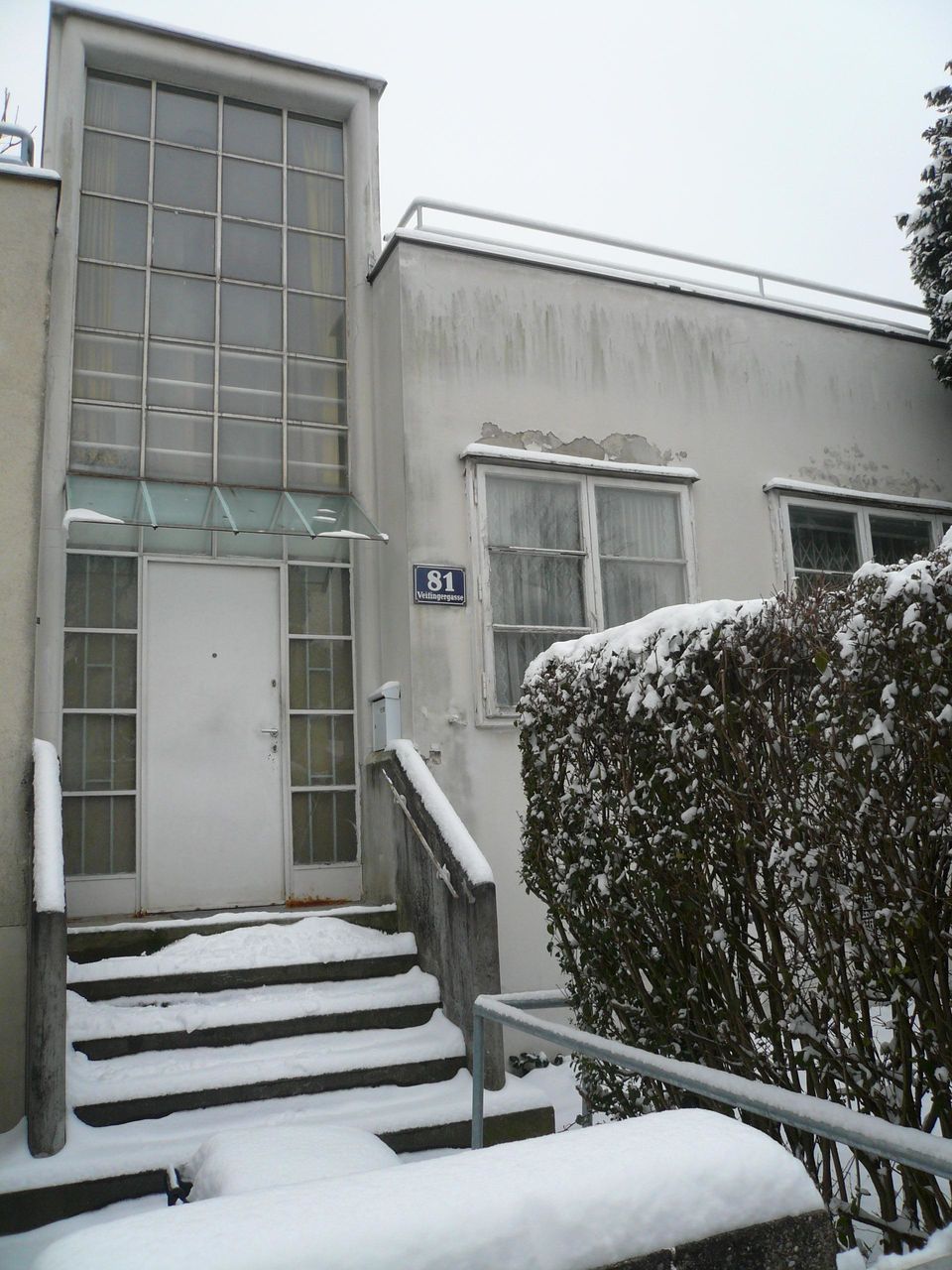
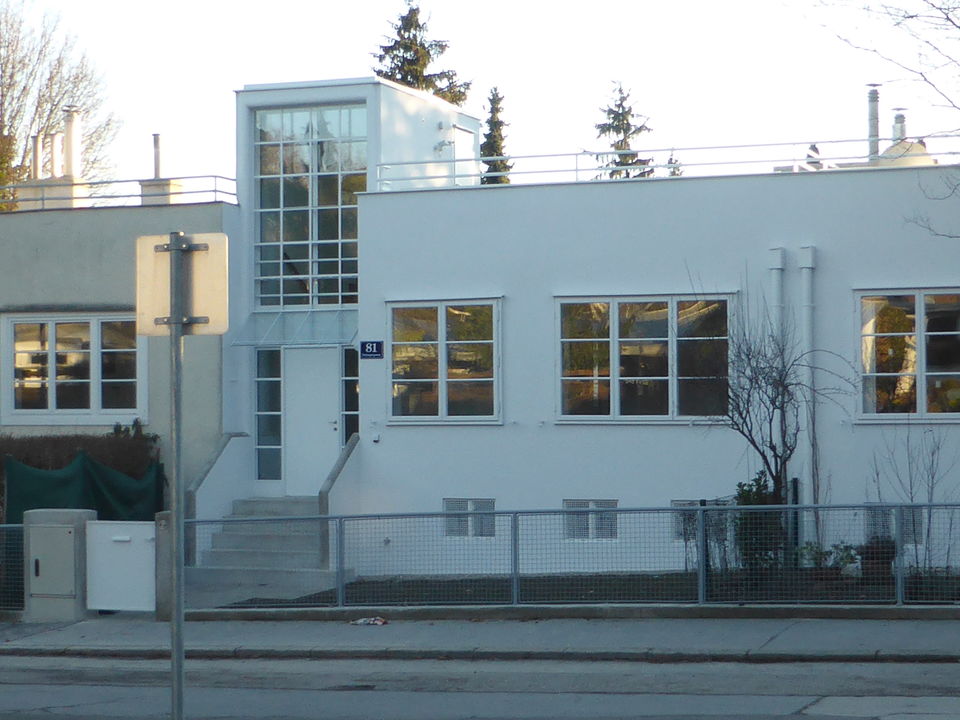
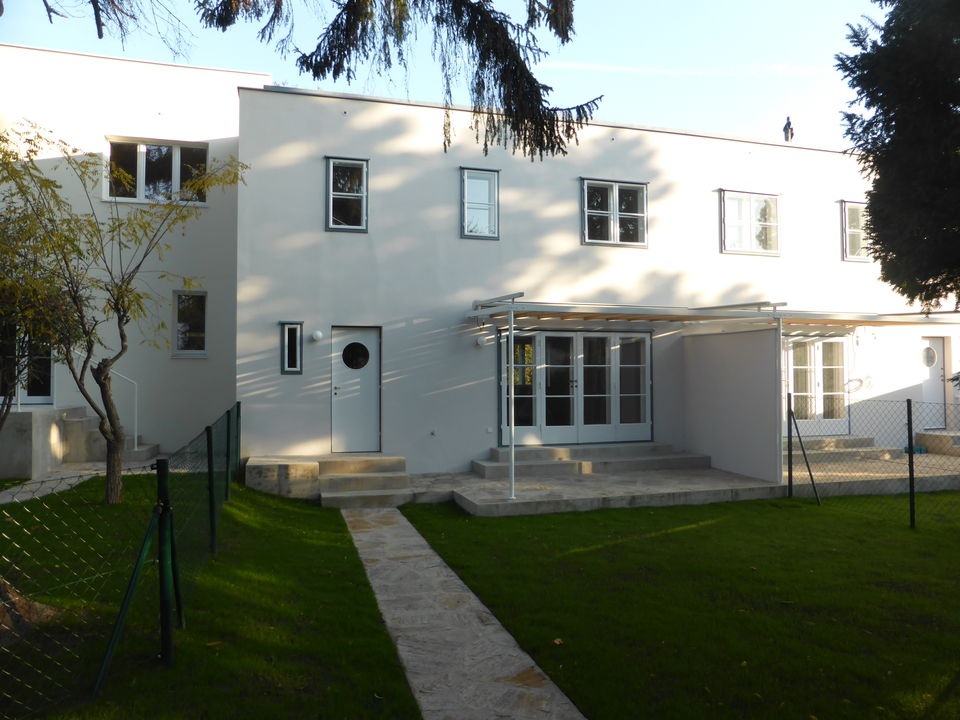
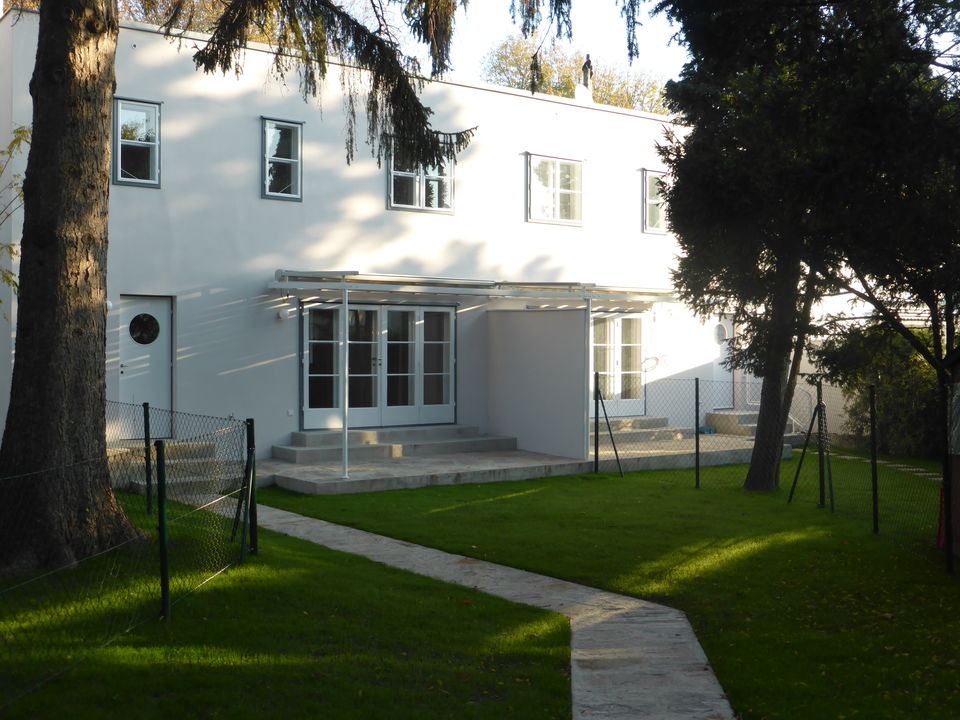
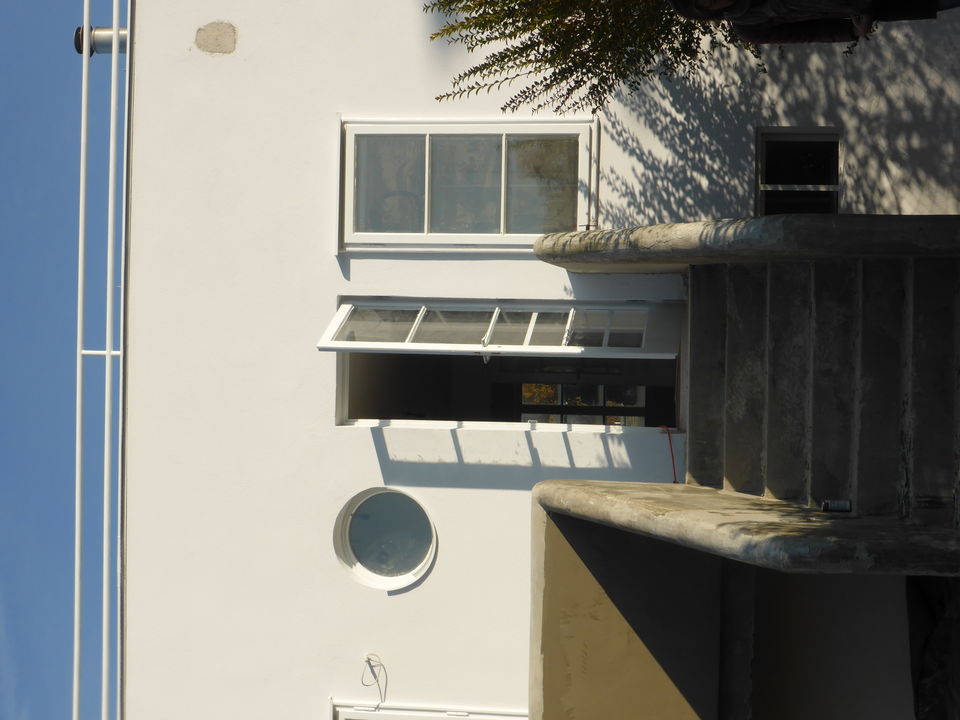
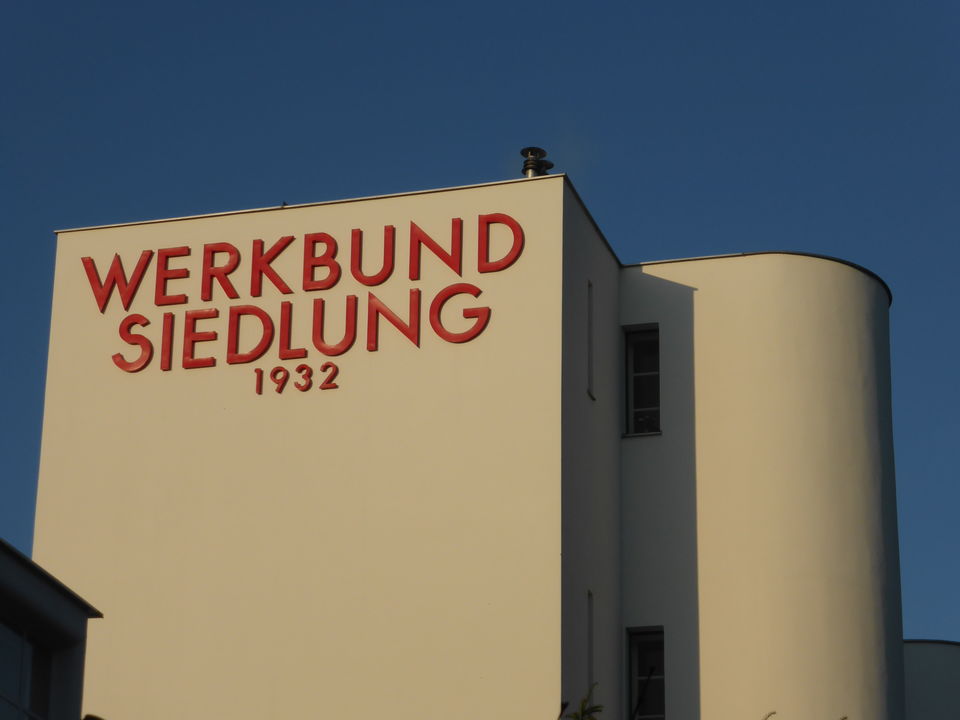
The Vienna ‘Werkbund’ housing estate was initiated by the architect Josef Frank, a representative of the Wiener Moderne movement. Originally 70 individual family homes were designed by 32 selected international and Austrian architects between 1930 and 1932. The basic idea was to showcase different individual solutions which demonstrated the most effective way to use space, coupled with modern interior design. Six buildings were lost in WW2 but replaced after the war.
The entire housing estate is listed as an outstanding example of Modernism in Austria. In close cooperation with the Federal Monuments Office (Bundesdenkmalamt), 48 buildings were renovated from top to bottom between 2012 and 2016 under the direction of p.good architects. Due to the different states of disrepair, it was decided that all the homes would be extensively renovated.
As the majority of the homes were still inhabited during the renovation process, it was a particularly challenging to meet the requirements of the listed buildings preservation regulations and at the same time to meet the needs of the tenants. On the one hand, the goal was to preserve as many of the historical features as possible and on the other hand to create a comfortable, modern living-environment. For the restoration works, the same building methods were used as in the early 1930s.
To fulfil modern environmental requirements, the renovated historical windows were improved by using thermally-insulated glass. In some instances, ventilation systems with heat retaining features were installed. Because of these measures it was possible to reduce the loss of thermal energy in the buildings by half.