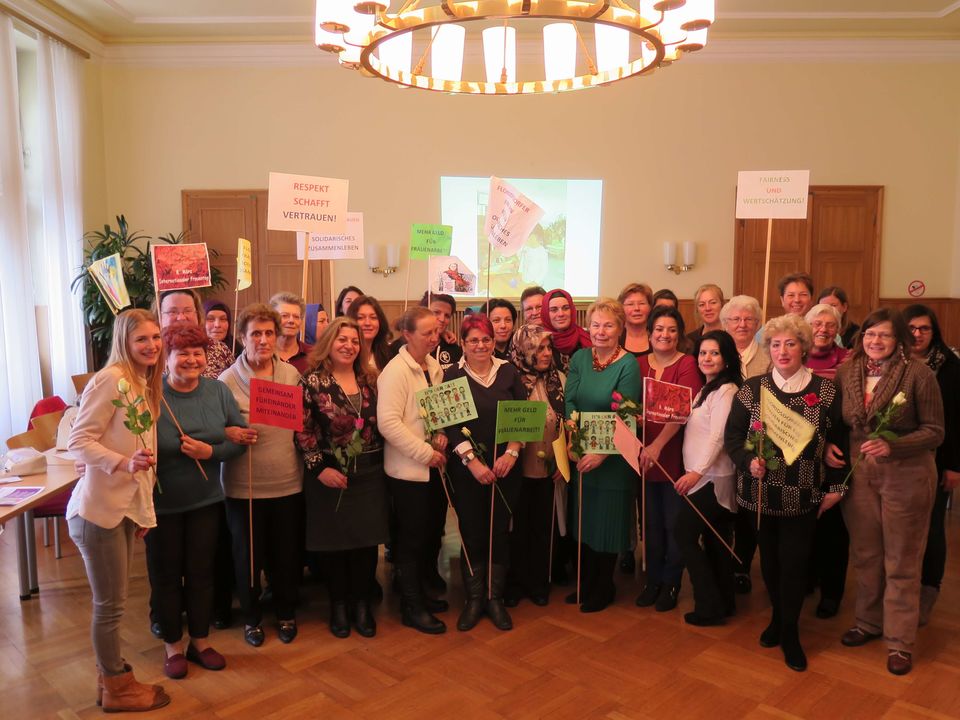
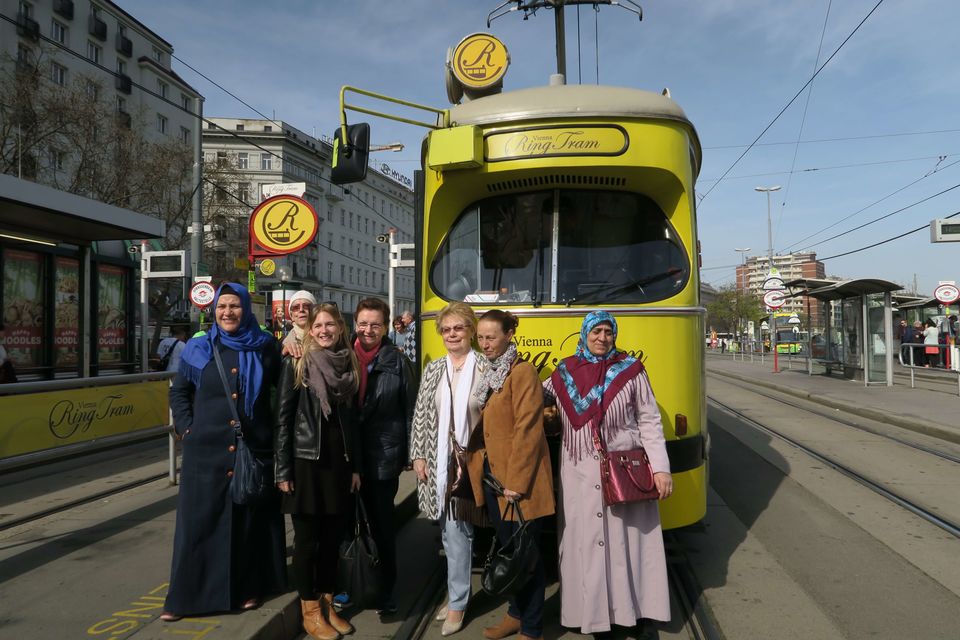
The ‘Women’s Café’ is a venture whose initial aim was to address the issue of non-integration of women of different ages and social and ethnic backgrounds. The establishment of the Café in the 21st district of Vienna has revealed just how powerful such alternative spaces are in terms of awareness raising as well as in terms of solidarizing and self-empowerment processes. This can be judged on an individual scale as well as in relation to the dimensions of ageism and gender, with a measureable impact on the local community.
Before the women’s café was established wohnpartner had made some attempts to organise breakfasts in the courtyards of housing complexes in order to establish communication structures between the different groups of women. The reason behind these activities was the increasing ethnically attributed conflicts in the area. The breakfast idea did not work out, as the public space was too open a stage resulting in the Austrian women being discouraged from getting together with the women wearing headscarves. Only after transferring the setting inside, women of different ages and cultural backgrounds started to show up. Then, the challenge was to handle diversity in real life scenarios, as the women stayed within their own ethnic groups with only little interaction with others. The next objective was to initiate encounters by making the visitors more aware of commonalities hidden behind foreignisms. One key feature to success of the scheme were the children, who became connectors and door openers between the elderly Austrian women and young mothers with different cultural backgrounds. Thus, not only new friendships developed, but also self-organized supportive structures and shared activities have arisen outside the women’s café. Also, by word of mouth advertising and media reports, the catchment area of the women’s café has increased to an area spanning the whole city.