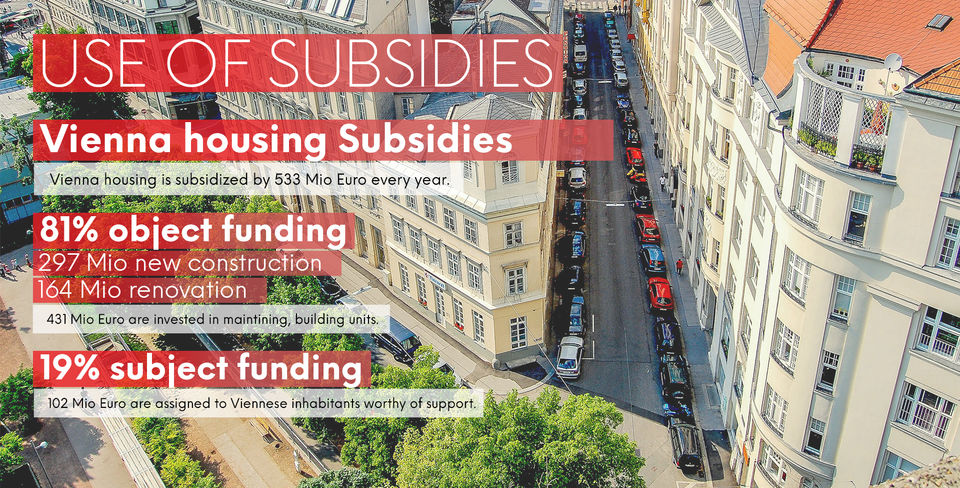
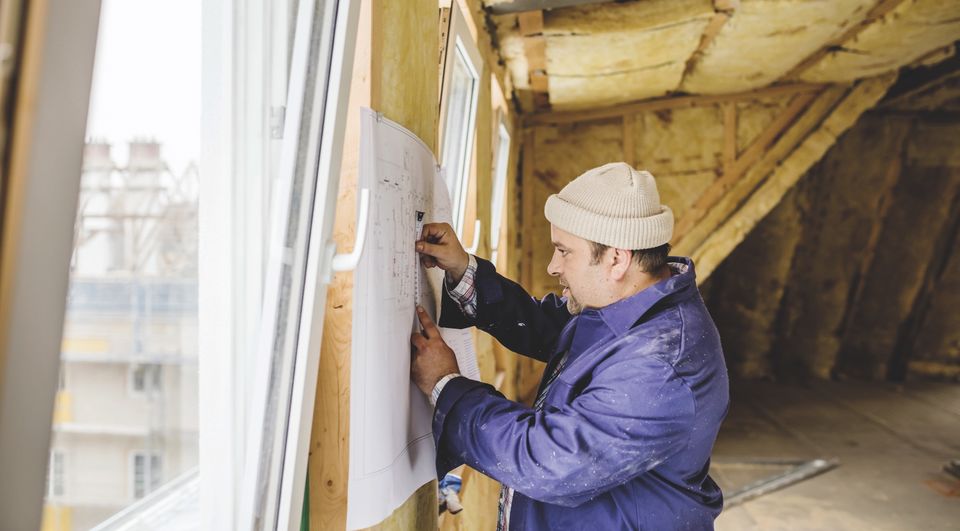
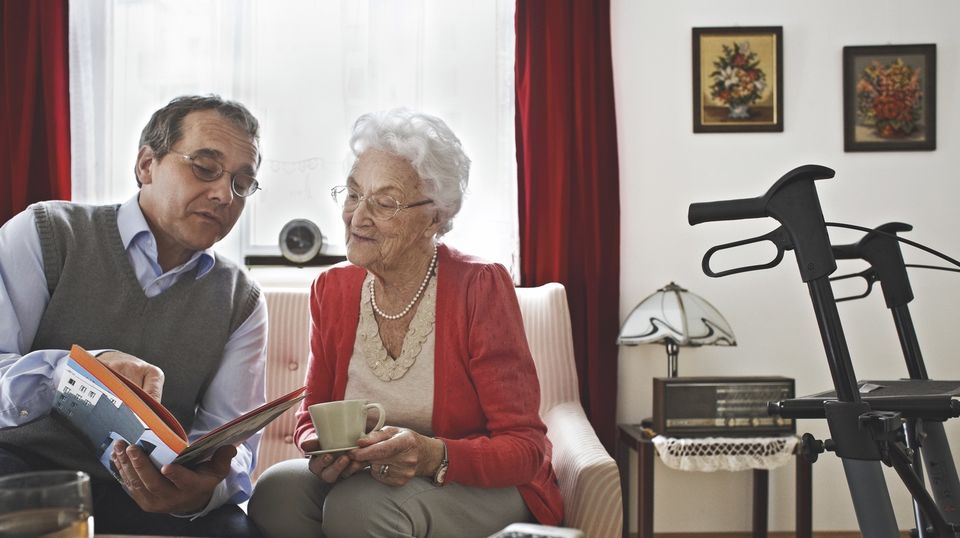
Vienna’s subsidized housing programme ensures access to affordable housing for a wide range of income groups. Without housing subsidies and the related cost ceilings for construction and rent, costs faced by tenants would be one-third higher. The different subsidy schemes are used to support the construction of new housing, the refurbishment of old buildings and the provision of direct financial assistance to people on low incomes.
Secure Financing
The financing of social housing, both in the rental sector and in the subsidized owner-occupied and single-family housing sector, is based on a fixed, pre-determined part of the income tax. 1 percent of the income is payed in equal parts by employees and employers as housing promotion contribution (Wohnbauförderbeitrag). Vienna receives through this national tax around € 250 million each year for housing. All together Vienna spends about € 600 million per year for housing. This way of financing still provides a secure basis for the planning of social housing programmes on a large scale, which would not be possible under strictly market-dependant housing policies. The city council itself, however, has had to contribute further means from its own budgets in recent years due to an increased demand in housing.
Direct and Indirect Subsidies
The federal constitution allows Vienna to set its own criteria for housing subsidies more or less autonomously; direct subsidies are given to the developers in order for them to reduce the financing costs and rents. A loan with 1% interest is granted for up to 35 years and covers approximately 35 percent of the construction costs. The rest is financed by bank loans, developers equity and sometimes by a further contribution of the tenants. For the duration of repayment rents are capped to the cost rent. Contrary to individual benefits, these direct subsidies give the local government the opportunity to directly influence housing production.